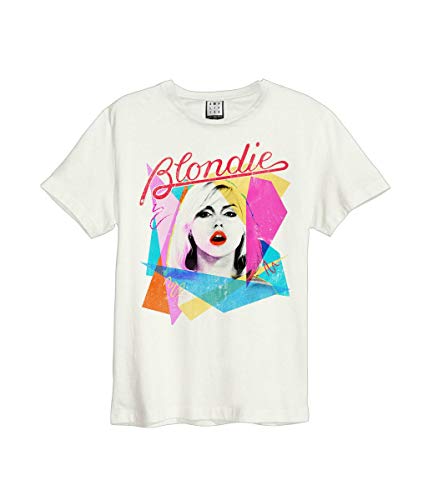

Blondie
Blondie t-shirts and merchandise, hand-picked by RockTee.
Shop the band
Blondie merch
Blondie: New York Attitude, Pop Instinct
Blondie made the boundaries between punk, pop and dance music feel unusually porous. Formed in New York in 1974 by singer Debbie Harry and guitarist Chris Stein, the band emerged from the downtown scene associated with CBGB. Yet their musical imagination reached well beyond any single club or genre: girl-group melodies, garage rock, disco, reggae and early hip-hop all found space in their songs.
That breadth is central to Blondie’s appeal. They could sound sharp and scrappy, coolly glamorous or completely at home on a dancefloor without losing their identity. Harry’s voice tied those shifts together, moving between conversational detachment, teasing humour and direct emotional expression.
The Sound: Hooks with Rough Edges
Blondie’s early recordings put bright melodies against wiry guitars, keyboards and propulsive drums. There is a fondness for older pop forms, but little sense of polite revivalism. Songs often arrive with a raised eyebrow, giving even their sweetest hooks a slightly abrasive edge.
As the arrangements grew more expansive, the band’s rhythmic curiosity became increasingly important. “Heart of Glass” placed Harry’s cool delivery inside a disco framework, while “Rapture” brought rap into their pop vocabulary. Their version of “The Tide Is High”, originally recorded by the Paragons, showed how naturally they could reshape reggae material around their own personality.
These weren’t simply costume changes. Across the different styles, Blondie retained a recognisable balance of rhythmic precision, melodic immediacy and downtown irreverence.
Key Records to Explore
Blondie (1976) introduces the band’s early character: brisk, playful and steeped in pop history. “X Offender” is a useful starting point for hearing how their melodic instincts worked alongside a tougher club-band sound.
Plastic Letters (1978) develops that approach, with “Denis” and “(I’m Always Touched by Your) Presence, Dear” offering two distinctive routes into their increasingly assured songwriting and performance.
Parallel Lines (1978) is the clearest introduction to their range. Produced by Mike Chapman, it brings together the clipped energy of “Hanging on the Telephone”, the guitar-pop clarity of “Sunday Girl” and the disco pulse of “Heart of Glass”.
Eat to the Beat (1979) keeps the momentum restless. “Dreaming”, “Union City Blue” and “Atomic” show a band balancing forceful playing with increasingly spacious, dramatic arrangements.
Autoamerican (1980) pushes further outward. With “The Tide Is High” and “Rapture” among its tracks, it makes Blondie’s resistance to a fixed musical category especially clear.
Visual Identity and Merch
Blondie’s imagery is as distinctive as their stylistic mix. Harry’s bleached hair, graphic make-up and combination of glamour with street-level cool became a defining focal point. Just as important is the tension between her magnetic presence and Blondie’s identity as a working band.
The Parallel Lines sleeve captures that tension neatly: black-and-white vertical stripes, the suited band and Harry’s contrasting white dress create an instantly readable composition.
For anyone exploring Blondie merch, that artwork offers a strong visual reference, alongside band photography and typographic designs. The most interesting choices reflect a particular connection: a favourite record, the early New York aesthetic or the collision of punk attitude and polished pop.