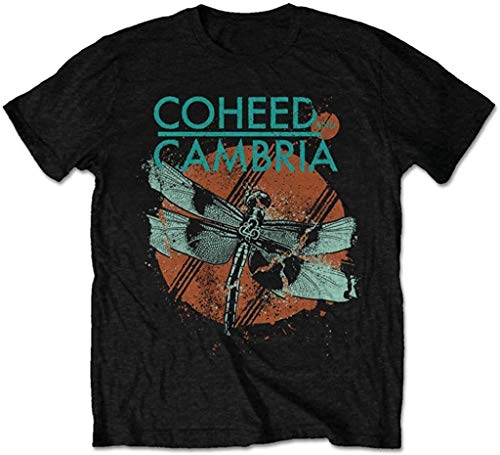

Coheed and Cambria
Coheed and Cambria t-shirts and merchandise, hand-picked by RockTee.
Shop the band
Coheed and Cambria merch
Coheed and Cambria: melody inside the machinery
Coheed and Cambria sit at a productive crossroads: progressive rock’s appetite for long-form storytelling, post-hardcore’s nervous energy and pop’s instinct for a chorus. Frontman Claudio Sanchez’s high, expressive voice is the immediate signature, but the band’s appeal runs deeper than vocal recognition. Their songs can move from tightly interlocking guitar parts into open, direct hooks without making either side feel like a compromise.
Much of their catalogue connects to Sanchez’s science-fiction narrative, The Amory Wars. That framework shapes the lyrics, artwork and recurring imagery, but it is not an entrance exam. You can follow the characters and chronology, or simply hear songs about fear, devotion, betrayal and the difficult business of growing up.
The sound: intricate, but never just technical
The tension between complexity and accessibility is central to Coheed and Cambria. Riffs frequently twist around the beat, while quieter passages create room for atmosphere before the heavier sections return. Sanchez and fellow guitarist Travis Stever give the music both density and melodic detail.
Crucially, the songs tend to offer something immediate to hold onto. “A Favor House Atlantic” is brisk and bright despite its restless instrumental movement; “Welcome Home” builds around a weighty guitar figure and a sense of theatrical scale. Those two tracks make useful introductions to a band whose range is broader than either suggests.
Key records to explore
The Second Stage Turbine Blade (2002) captures their early blend of wiry guitars, emotional urgency and ambitious songwriting. Its rougher edges are part of its character, and it remains a useful starting point for listeners drawn to the band’s post-hardcore roots.
In Keeping Secrets of Silent Earth: 3 (2003) expands that approach. The title track gives their dramatic, extended arrangements space to develop, while shorter songs keep the record moving. It is a particularly clear demonstration of how their conceptual ambitions and melodic instincts support each other.
Good Apollo, I’m Burning Star IV, Volume One: From Fear Through the Eyes of Madness (2005) pushes further into hard-rock weight and progressive structure. “Welcome Home” provides an accessible doorway, but the closing “The Willing Well” sequence reveals the record’s more elaborate construction.
For a different perspective, try The Color Before the Sun (2015). It steps outside The Amory Wars framework, placing more directly personal writing in the foreground without abandoning the band’s distinctive melodic voice.
Visual identity and merch
Coheed and Cambria’s visual identity grows naturally from their storytelling. Comic-book imagery, science-fiction settings and recurring symbols give the artwork a shared vocabulary across releases. The Keywork emblem is especially closely associated with the band, functioning as a compact visual shorthand for a much larger fictional world.
That creates two appealing directions for merchandise: understated symbol-led designs and more expansive, illustrated artwork. For listeners who enjoy the narrative, character and album imagery can carry specific associations. For others, the appeal is simply the contrast between graphic clarity and intricate world-building.
The strongest connection is between the image and the music you return to. An album-focused design can mark a favourite era; a recurring emblem can express a broader attachment without needing to explain the whole story.