Creedence Clearwater Revival
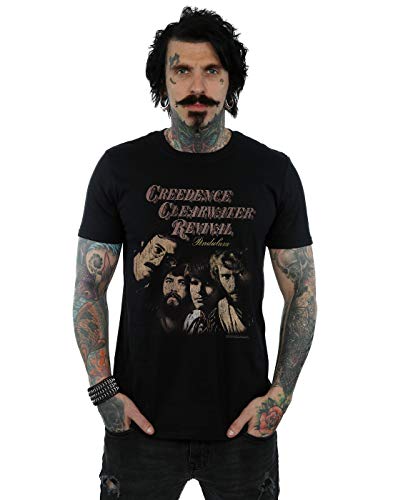
Creedence Clearwater Revival Pendulum T-Shirt
Check price on AmazonBuy now

Creedence Clearwater Revival t-shirts and merchandise, hand-picked by RockTee.
Shop the band
Creedence Clearwater Revival made music that sounded steeped in the American South, despite coming from the San Francisco Bay Area. Their records brought together rock ’n’ roll, blues, country and rhythm and blues, with a lean, forceful approach that stood apart from the extended psychedelia associated with their Californian contemporaries.
The classic line-up paired John Fogerty’s lead vocals and guitar with Tom Fogerty’s rhythm guitar, Stu Cook’s bass and Doug Clifford’s drums. John’s rasp was the defining voice, but the band’s rhythmic discipline mattered just as much: these songs could feel loose and earthy without losing their shape.
CCR are closely associated with swamp rock: insistent grooves, bluesy guitar figures and imagery drawn from rivers, bayous and back roads. Yet that label only captures part of their range. They could deliver brisk rockers, reflective country-influenced songs and extended performances built around repetition and tension.
John Fogerty’s songwriting often placed unease beneath an inviting melody. “Bad Moon Rising” sounds buoyant until you listen to its warnings of disaster. “Fortunate Son” turns a driving rhythm into an attack on privilege and the unequal burden of war. “Who’ll Stop the Rain” shows how effectively the band could work with restraint.
Their music remains accessible without being lightweight. The hooks arrive quickly, while the playing leaves room for the vocal and the story.
The self-titled Creedence Clearwater Revival debut, released in 1968, introduced their tough, blues-rooted approach. Its versions of “Suzie Q” and “I Put a Spell on You” reveal a band able to make existing material sound distinctly its own.
Their extraordinary run of three albums in 1969 offers the clearest route into their development. Bayou Country contains “Born on the Bayou” and “Proud Mary”, establishing the balance between atmosphere and concise songwriting. Green River sharpens that approach through its title track, “Bad Moon Rising” and “Lodi”. Willy and the Poor Boys brings together “Down on the Corner” and “Fortunate Son”, moving between street-corner warmth and political bite.
For a single studio-album starting point, Cosmo’s Factory from 1970 makes a strong case. “Travelin’ Band”, “Up Around the Bend” and “Lookin’ Out My Back Door” display their range, while the extended “I Heard It Through the Grapevine” gives the musicians space to stretch.
CCR’s visual identity was comparatively unshowy. Denim, checked shirts and straightforward band photography suited music grounded in working lives rather than theatrical spectacle. Their image offered a clear contrast to the more elaborate styling of many late-1960s rock acts.
Album artwork provides another useful way into that identity. The street scene on Willy and the Poor Boys echoes its communal musical feel, while Cosmo’s Factory places the band in an informal rehearsal setting.
For anyone considering CCR merch, those original visual references are a useful guide: band photography, recognisable lettering and album imagery connect directly to the records. The appeal lies in that continuity between appearance and sound—direct, unfussy and full of character.