
Fleetwood Mac
Fleetwood Mac t-shirts and merchandise, hand-picked by RockTee.
Shop the band
Fleetwood Mac merch

Fleetwood Mac: Blues Roots, Pop Instincts
Fleetwood Mac’s history is best heard as a series of transformations rather than a straight line. Formed in London in 1967, the band began with Peter Green’s expressive guitar playing at the centre of a British blues sound. Over time, that foundation widened into atmospheric rock and, eventually, the intricately arranged pop associated with Lindsey Buckingham, Stevie Nicks and Christine McVie.
What connects those phases is a feel for tension: between restraint and release, polished surfaces and unsettled emotions, individual voices and a shared rhythm. Mick Fleetwood’s drumming and John McVie’s bass provided continuity as the writers, singers and musical priorities changed around them.
The Sound: More Than Soft Rock
Calling Fleetwood Mac a soft-rock band captures only part of the picture. Green-era recordings could be lean and forceful, but they also made room for tenderness and space. “Albatross”, an instrumental built around gently drifting guitar lines, shows how much atmosphere the group could create without a vocal.
The later band brought three distinct songwriting personalities into close contact. Christine McVie favoured clear melodies and emotional directness. Nicks offered a huskier vocal presence and lyrics rich in suggestion. Buckingham supplied restless guitar textures, rhythmic detail and a willingness to disrupt a song’s smooth exterior.
Their harmonies often make complicated feelings sound effortless. Listen beneath that ease, though, and the arrangements are full of small contrasts: clipped acoustic parts against sustained keyboards, tightly controlled percussion beneath loose-sounding vocals.
Key Records to Explore
Fleetwood Mac (1968) is the starting point for the original blues band. It places Green’s playing within a direct, uncluttered setting, far removed from the layered productions that would follow.
Then Play On (1969) opens out that early sound. Its shifts in mood and texture make it an important bridge between blues foundations and a more exploratory approach.
Fleetwood Mac (1975) introduces the Buckingham–Nicks line-up on record. “Rhiannon”, “Landslide” and “Say You Love Me” reveal how naturally contrasting writers could sit within one album.
Rumours (1977) is the clearest expression of that balance. Its songs turn relationship fractures into precise, accessible arrangements without removing their bitterness or vulnerability. The familiar singles matter, but hearing the album in sequence gives the different perspectives room to answer one another.
Tusk (1979) is the revealing counterpoint: stranger, less settled and more interested in texture. Tango in the Night (1987) offers another direction, with gleaming production and densely layered hooks.
Visual Identity and Merch
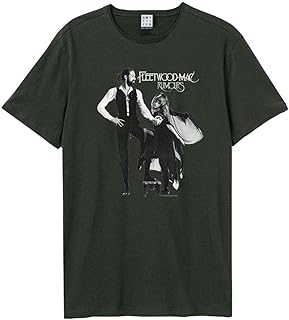
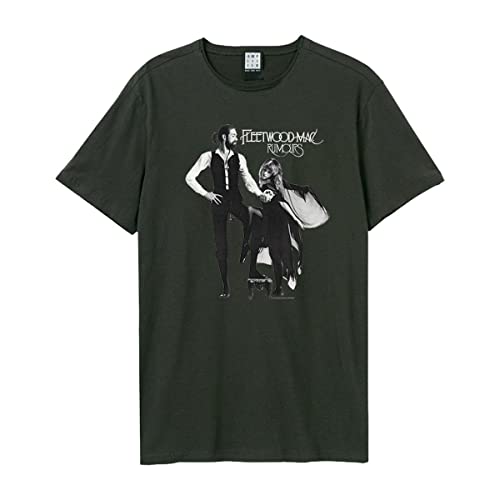
Fleetwood Mac’s visual identity is closely tied to particular records rather than one fixed graphic language. The Rumours cover, with its theatrical black-and-white photograph of Nicks and Fleetwood, remains a particularly recognisable reference. Its sense of movement and costume suits music that combines intimacy with performance.
Nicks’s flowing stage clothes and shawls also form a distinct visual thread, though they represent one part of the band rather than its entire identity.
For readers drawn to band merchandise, the useful question is which Fleetwood Mac they want the artwork to reflect: the blues group, the Rumours line-up or the more stylised later records. Album imagery offers a meaningful connection to the music without needing an invented slogan or an exaggerated claim.