
Guns N' Roses
Guns N' Roses t-shirts and merchandise, hand-picked by RockTee.
Shop the band
Guns N' Roses merch
Guns N’ Roses: Hard Rock with a Restless Edge
Guns N’ Roses built their sound on friction: blues-rooted guitar playing against punk impatience, street-level grit alongside a taste for grand arrangements. Emerging from Los Angeles in the 1980s, they made hard rock that could feel loose and volatile without losing its melodic centre.
Axl Rose’s voice is central to that identity, moving from a low, conversational delivery to a cutting upper register. The interplay between Slash and Izzy Stradlin gave the early records much of their character: lead lines that sang rather than simply showed off, backed by rhythm guitar with swing and space. Duff McKagan and Steven Adler helped make those songs move, keeping the debut’s heavier passages from becoming rigid.
Start with Appetite for Destruction
Released in 1987, Appetite for Destruction remains the clearest introduction. “Welcome to the Jungle” turns tension into a tightly structured opening statement, while “It’s So Easy” and “Mr. Brownstone” show how much of the band’s force comes from rhythm.
“Sweet Child o’ Mine” reveals another side. Its instantly recognisable guitar figure leads into a song with genuine tenderness, without smoothing away the band’s roughness. “Paradise City” stretches that balance further, pairing a broad, melodic chorus with an increasingly frantic finish.
Across the album, the production leaves the instruments distinct enough for the arrangements to breathe. Listen beyond the lead guitar and there is plenty happening in the rhythm parts, bass movement and shifts in Rose’s phrasing.
Beyond the Debut: Acoustic Turns and Bigger Canvases
G N’ R Lies followed in 1988, placing the previously released Live ?!@ Like a Suicide* material alongside acoustic recordings. “Patience” is the essential stop here, demonstrating how effectively the band could work with restraint.
The two Use Your Illusion albums, released in 1991, expanded the palette considerably. Piano, longer forms and more elaborate arrangements sit beside direct rock songs. “November Rain” and “Estranged” represent the expansive side; “You Could Be Mine” delivers a harder, more concentrated attack.
For a different perspective, “The Spaghetti Incident?” explores the band’s influences through covers, particularly punk and hard rock. Chinese Democracy, released in 2008, moves towards a denser, more layered sound, with electronic textures and intricate guitar arrangements. It is a distinct chapter rather than a repeat of the debut’s approach.
Visual Identity and Merchandise
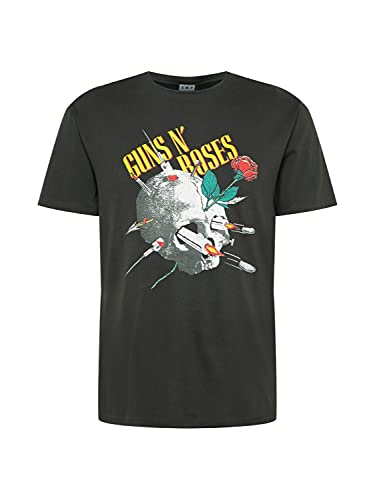
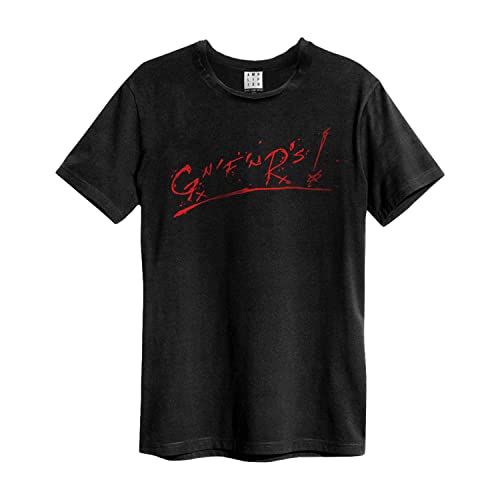
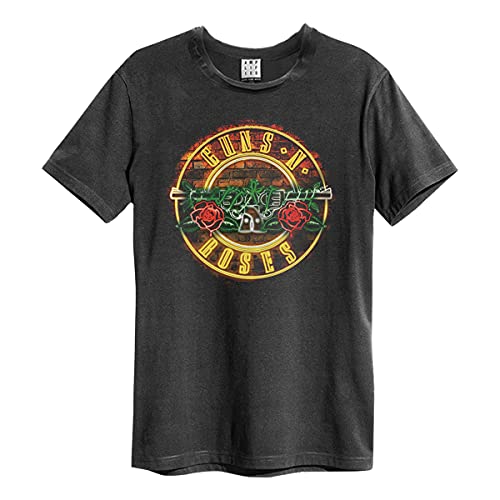
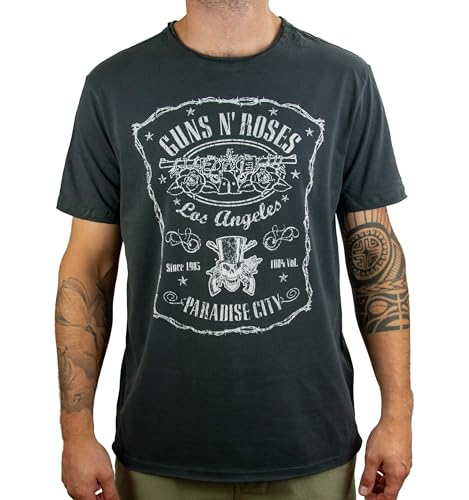
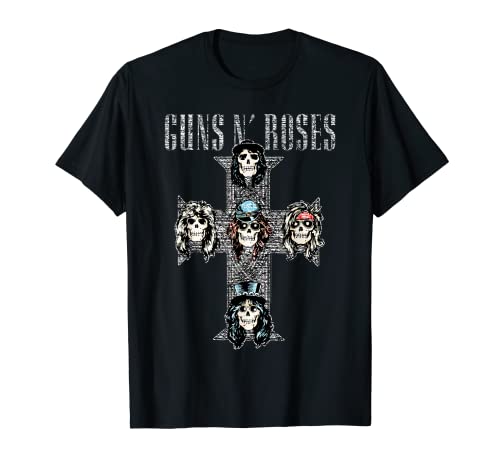
Guns N’ Roses’ imagery makes the same contrasts as their music. The familiar circular emblem combines revolvers and roses: hard edges set against something decorative and vulnerable. Skulls, distressed lettering and tattoo-influenced artwork extend that visual language.
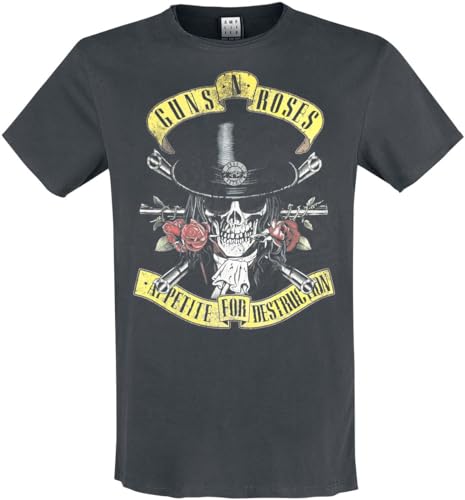
The Appetite for Destruction cross-and-skulls artwork offers a particularly direct connection to the early band. The Use Your Illusion artwork, drawing on a detail from Raphael’s The School of Athens, reflects a broader, more theatrical presentation.
For anyone exploring their merchandise, the artwork is a useful starting point. A logo-led design foregrounds the band’s overall identity; album imagery ties the choice to a particular record and sound. Looking closely at that connection makes the visual side more rewarding than treating every design as interchangeable.