Kiss
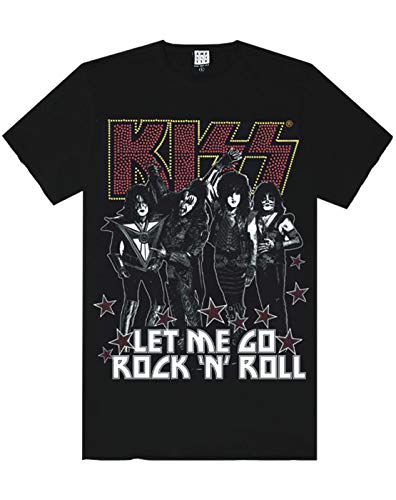
Kiss t-shirts and merchandise, hand-picked by RockTee.
Shop the band
Kiss merch
Kiss: Big Riffs and a Fully Formed Image
Kiss built their identity around a simple connection: music that lands quickly and an image you recognise instantly. Formed in New York in 1973, the original line-up brought together Paul Stanley, Gene Simmons, Ace Frehley and Peter Criss. Their songs combined hard-rock riffs with pop-minded choruses, while their make-up and stage personas gave each member a distinct place in the band’s visual world.
There is more variety in the catalogue than the fire-and-platforms reputation might suggest. Alongside the swaggering rock songs are acoustic ballads, disco rhythms, heavier metal influences and glossy eighties production. What holds those changes together is an emphasis on direct hooks and performance.
The Sound: Weight, Swing and Singalong Choruses
Early Kiss drew much of their power from the interplay between chunky rhythm guitar, melodic lead breaks and a rhythm section that could swing rather than simply hammer away. Stanley’s expressive delivery and Simmons’ lower, rougher voice offered contrasting ways into the songs, while Frehley and Criss added further vocal character.
The writing often favoured economy: a recognisable opening riff, a clear chorus and enough space for the groove to work. That approach made the material particularly effective live. Even when the production grew more elaborate, Kiss rarely lost sight of the chorus as the song’s centre of gravity.
Key Records to Explore
The self-titled Kiss (1974) is the clearest starting point for their foundations. “Strutter”, “Deuce” and “Black Diamond” establish the mix of attitude, melody and guitar-driven momentum that shaped their early years.
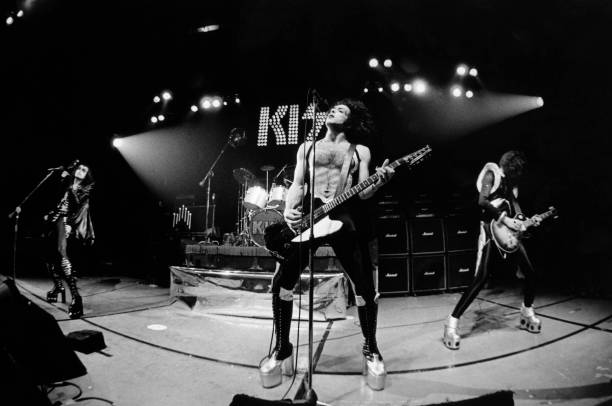
Alive! (1975) is central to understanding their breakthrough. It presents the early material through the scale and atmosphere of a concert, showing why the stage became so important to the band’s identity.
Destroyer (1976) broadens the palette. Working with producer Bob Ezrin, Kiss brought greater drama and arrangement detail to songs including “Detroit Rock City” and “God of Thunder”. “Beth”, sung by Criss, reveals a markedly softer side.
For a more straightforward dose of guitar-led Kiss, Rock and Roll Over (1976) makes a useful counterpoint. Dynasty (1979), meanwhile, includes “I Was Made for Lovin’ You”, where their chorus-writing meets a disco pulse. Creatures of the Night (1982) offers a heavier, more forceful route into the catalogue.
Visual Identity and Merch
The original personas — Stanley’s Starchild, Simmons’ Demon, Frehley’s Spaceman and Criss’ Catman — turned individual faces into instantly readable symbols. Black-and-white make-up, theatrical costumes and the angular Kiss logo created a visual language that could travel far beyond the stage.
Album artwork adds another layer. The illustrated cover of Destroyer presents the band as larger-than-life characters, while Alive! puts performance at the centre. Those approaches offer different reference points for appreciating Kiss merch: the theatrical mythology on one hand, the working rock band on the other.
For listeners choosing a design, a favourite record or persona is a more personal starting point than recognition alone. The strongest connection is between the image you wear and the music you return to.