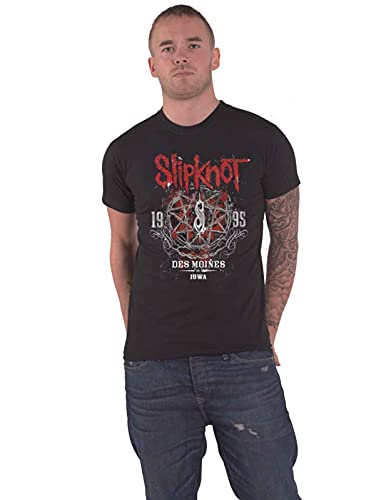
Slipknot
Amplified Slipknot 'Des Moines' (Black) T-Shirt Clothing (Small)
Check price on AmazonBuy now

Slipknot t-shirts and merchandise, hand-picked by RockTee.
Shop the band
Slipknot’s music turns tension into something physical. Formed in Des Moines, Iowa, the band emerged with a sound that brought metal’s weight into contact with turntables, samples, additional percussion and vocals that could move from a roar to an exposed melodic line. Their breakthrough came with their 1999 self-titled album, but their lasting appeal rests on more than sheer force.
Underneath the noise are songs about alienation, anger, grief and the struggle to belong. That emotional directness helps explain why Slipknot’s identity extends so naturally beyond records and stages into clothing, artwork and fan-made imagery.
Slipknot are often grouped with nu metal, particularly when discussing their early work. It is a useful starting point, though not a complete description. Their music also draws on extreme metal’s speed and abrasion, industrial textures and the structural discipline of a sharply written rock song.
The percussion is central. Rather than simply supporting the guitars, it can make a track feel crowded and unstable, with competing rhythmic accents adding pressure. Samples and scratching interrupt the surface, while Corey Taylor’s vocals give the chaos a recognisable emotional focus.
Melody is not an occasional concession to accessibility. It is part of the band’s language: a clean chorus can make the surrounding aggression feel more intense, while quieter passages reveal the unease behind it.
Slipknot (1999) is the clearest introduction to the band’s early collision of styles. “Wait and Bleed” balances a memorable vocal hook with jagged momentum, while “Surfacing” captures their confrontational edge. The album feels restless, with little separation between its rhythmic, electronic and guitar-driven elements.
Iowa (2001) pushes that approach towards a darker, more oppressive sound. “People = Shit” and “Disasterpiece” show its punishing attack, but the record’s slower stretches are equally important: atmosphere becomes another source of weight.
Vol. 3: (The Subliminal Verses) (2004) widens the palette. “Duality” and “Before I Forget” offer strong entry points, while acoustic textures and more varied arrangements demonstrate how much range the band could accommodate without losing their character.
We Are Not Your Kind (2019) makes a rewarding later stop. “Unsainted” combines choral colour with a forceful chorus, and the album’s interludes and unsettling textures favour a complete listen rather than a collection of isolated tracks.
Slipknot’s visual identity is inseparable from their music. Masks and coordinated stage clothing turn the group into a collective presence without making its members interchangeable. Individual mask designs change, allowing the imagery to develop alongside the records rather than remain a fixed costume.
The jagged wordmark, stylised “S”, nine-pointed star and recurring use of numbering create a graphic language that remains recognisable beyond an album sleeve. On merchandise, these elements can communicate affiliation immediately; artwork-led designs offer a closer connection to a particular record or period.
For RockTee readers, that distinction is worth considering: a logo-led piece expresses a broad attachment to Slipknot, while album imagery points towards the sound and visual world that first drew you in.