
The Clash
The Clash t-shirts and merchandise, hand-picked by RockTee.
Shop the band
The Clash merch
The Clash: Punk as a Starting Point
The Clash formed in London in 1976, but their music soon pushed beyond the boundaries of British punk. Joe Strummer’s rough-edged delivery and Mick Jones’s melodic instincts gave the band two distinct voices, while bassist Paul Simonon and drummer Topper Headon helped make rhythmic exploration central to their sound.
Their songs could be confrontational, funny, restless or unexpectedly tender. Politics was not simply a backdrop: class, racism, policing and international conflict shaped their writing. Yet the strongest Clash records rarely feel like lectures. Hooks, characters and street-level detail carry the argument.
The Sound: Urgency Meets Curiosity
Early Clash recordings are lean and abrasive, with clipped guitar parts and vocals that sound impatient to get the words out. Even then, the band’s interests extended beyond punk. Their version of Junior Murvin’s “Police and Thieves”, on the original UK debut album, made reggae an important part of their recorded identity from the outset.
That curiosity widened into ska, dub, rockabilly, funk and hip-hop. Crucially, these influences changed how the band played rather than merely decorating the songs. Bass moved forward, drums became more spacious or danceable, and arrangements found room for atmosphere alongside attack.
The tension between Strummer’s grainy intensity and Jones’s pop sensibility remained a defining strength. The Clash could make a chorus immediately accessible without smoothing away its unease.
Key Records: Where to Begin
The Clash (1977) is the clearest introduction to their early urgency. “White Riot”, “Career Opportunities” and “London’s Burning” capture a band responding directly to its surroundings. Give ’Em Enough Rope (1978) brings a heavier, more polished attack, with “Safe European Home” and “Stay Free” showing different sides of their songwriting.
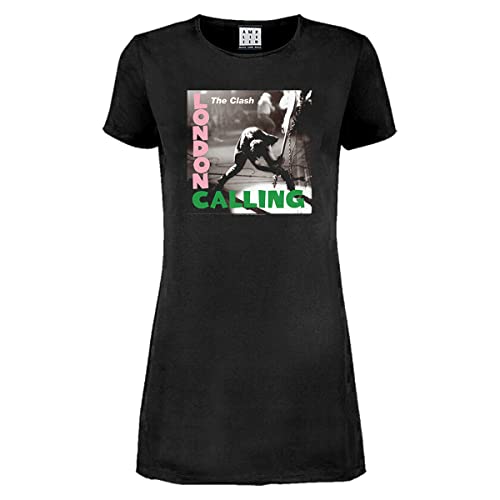
London Calling (1979) is the broadest starting point. Its title track is tense and ominous, while “Rudie Can’t Fail”, “Spanish Bombs” and “Train in Vain” demonstrate how naturally the group could move between rhythmic styles and emotional registers. The variety feels purposeful rather than scattered.
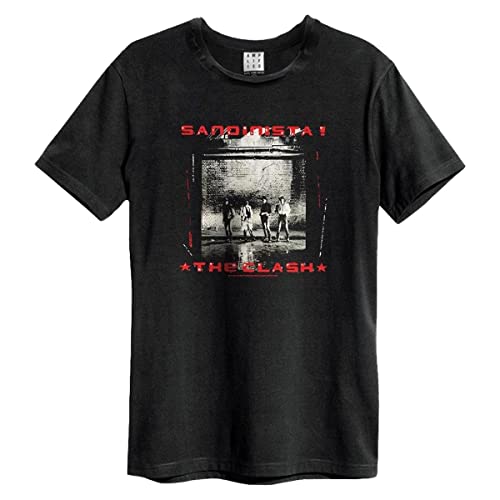
Sandinista! (1980) takes that openness further. Its sprawling structure rewards patient listening, with dub experiments, unusual textures and “The Magnificent Seven” expanding the band’s musical vocabulary.
Combat Rock (1982) offers another useful route in. “Should I Stay or Should I Go” and “Rock the Casbah” are familiar entry points, but “Straight to Hell” reveals a more haunting, spacious side.
Visual Identity and Merch
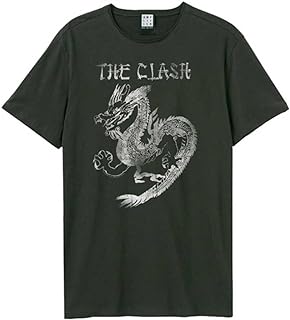
The Clash’s visual language combined DIY punk graphics with military-inspired clothing, stencilled lettering and politically charged imagery. Their appearance suggested engagement with the world outside the rehearsal room, not a separate fantasy universe.
The London Calling sleeve remains central to that identity: Pennie Smith’s photograph of Simonon smashing his bass, framed by pink and green lettering that references Elvis Presley’s debut album. It connects rock history with an image of disruption.
For anyone exploring Clash merchandise, artwork is a useful starting point. Album imagery, band-name graphics and photographic designs express different aspects of their identity. Look closely at what a design actually references; the most meaningful choice is often the record or period that matters to you, rather than the most recognisable image.