
The Cure
The Cure t-shirts and merchandise, hand-picked by RockTee.
Shop the band
The Cure merch
The Cure: atmosphere with a pop instinct
The Cure’s music lives in the space between intimacy and unease. Their songs can be spare and brittle, dense with melancholy, or unexpectedly bright, but Robert Smith’s voice gives those different moods a recognisable centre. He can sound withdrawn one moment and almost breathless the next, making even a tightly written pop song feel emotionally unsettled.
Calling The Cure simply a goth band misses much of their range. That association matters, especially when considering their darker records and visual identity, but so do post-punk, psychedelia and a gift for memorable melodies. The contrast is part of their appeal: lightness does not necessarily mean happiness, and their bleakest music often contains considerable beauty.
The sound: space, repetition and release
The Cure often build atmosphere through repeating bass figures, measured drums and guitar parts that suggest rather than dominate. Keyboards can deepen the background into something hazy or imposing. Instead of rushing towards a chorus, many songs allow small changes in texture to carry the emotional weight.
Their pop writing works differently without feeling disconnected. ‘Close to Me’, ‘Just Like Heaven’ and ‘Friday I’m in Love’ favour sharper hooks and more immediate movement. Smith’s phrasing keeps them from becoming anonymous radio songs: there is always a catch in the delivery, a nervous edge or a sense that joy might not last.
Key records: several ways into the catalogue
Seventeen Seconds is a useful starting point for the band’s early atmospheric turn. Its restrained arrangements and cool, open spaces make ‘A Forest’ feel less like a conventional single than a place the listener enters.
Faith deepens that sombre approach, while Pornography pushes it towards pressure and claustrophobia. These records show how repetition and texture can become the main drama, rather than simply supporting a tune.
The Head on the Door offers a broader introduction. It brings distinct moods together without losing focus, balancing rhythmic immediacy with the band’s more inward-looking tendencies. Kiss Me, Kiss Me, Kiss Me expands that variety, moving between abrasive passages, lush arrangements and direct pop.
Then there is Disintegration, where spacious production, slow-building structures and deeply exposed emotion meet. ‘Pictures of You’, ‘Lovesong’ and ‘Plainsong’ reveal different aspects of its character. It is a strong first choice for listeners drawn to immersive albums rather than a quick survey of singles.
Visual identity and merch: more than black eyeliner
Smith’s tousled hair, smudged lipstick and dark eye make-up are central to The Cure’s public image. The look is distinctive without depending on polished glamour, matching music that makes vulnerability visible.
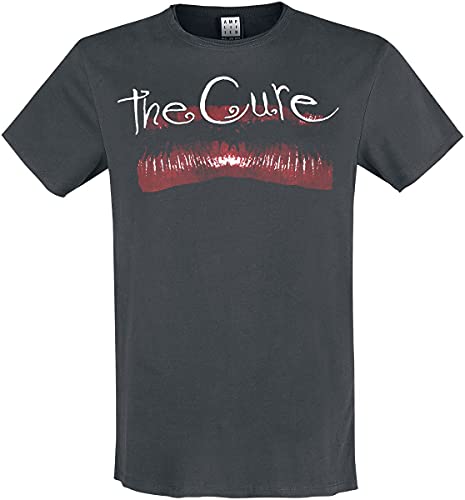
Their artwork offers an equally useful guide to band merchandise. The stark cover of Three Imaginary Boys, the hazy imagery of Disintegration and the close-up mouth on Kiss Me, Kiss Me, Kiss Me each connect to a different part of the catalogue.
For choosing merch, that album connection is often more rewarding than treating everything as a generic gothic aesthetic. A familiar cover or piece of lettering can point towards the record that matters most to you. The Cure’s visual appeal lies in that relationship: recognisable imagery carrying a particular sound, mood and personal memory.