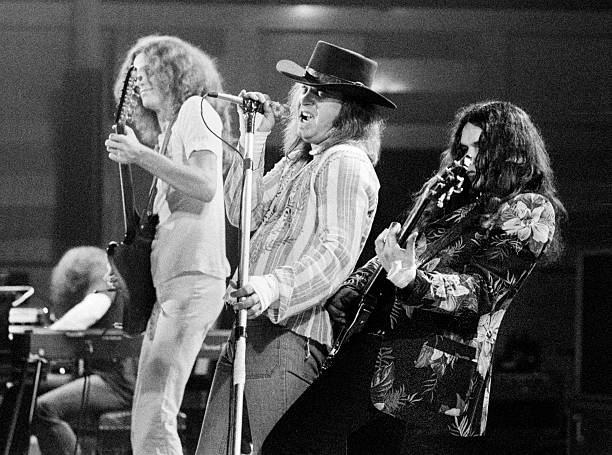
On 20 October 1977, Lynyrd Skynyrd boarded an aircraft that some of their own entourage reportedly feared was unsafe. Hours later, six people were dead, several of the survivors had suffered life-changing injuries, and one of America's most successful rock bands had been torn apart.
There had been troubling signs before the flight. Accounts from those travelling with the group described problems with the aircraft's engines, while the pilots were reportedly planning further maintenance once they reached their destination.
Then there was the album cover.
Just three days before the disaster, Lynyrd Skynyrd had released Street Survivors, featuring a photograph of the musicians surrounded by flames. Nobody could have anticipated how disturbing that image would become.
Nearly five decades later, the Lynyrd Skynyrd plane crash remains one of rock music's most devastating tragedies. But beyond the eerie coincidences lies a disturbing story of mechanical problems, inadequate planning and a flight that should have ended very differently.
Lynyrd Skynyrd were on the verge of something enormous
By October 1977, Lynyrd Skynyrd had established themselves among the biggest names in American rock music.
Formed in Jacksonville, Florida, the band had helped bring Southern rock to an international audience. Their unmistakable combination of blues-influenced guitars, raw vocals and sprawling arrangements had produced some of the decade's most recognisable songs.
Sweet Home Alabama had become an anthem. Free Bird, with its extended guitar solo, was already securing its place in rock history.
Frontman Ronnie Van Zant was the driving force behind the group. Alongside guitarists Gary Rossington, Allen Collins and Steve Gaines, he had developed a sound that was rough around the edges but extraordinarily effective.
Their fifth studio album, Street Survivors, arrived on 17 October 1977.
It represented an exciting new chapter, particularly following the arrival of Steve Gaines the previous year. His guitar playing and songwriting had helped revitalise the band, and there was a sense that Lynyrd Skynyrd were about to enjoy another surge in popularity.
Three days later, everything changed.
The warning signs before Lynyrd Skynyrd's final flight
The band's chartered aircraft was a Convair CV-240, a twin-engine propeller plane originally developed in the 1940s.
It wasn't an unusual choice for touring musicians of the period. Travelling privately allowed bands to move between cities without the restrictions of commercial airlines, an important consideration during increasingly demanding concert schedules.
However, Lynyrd Skynyrd's aircraft had reportedly developed problems before the fateful journey.
Survivors and people associated with the tour later described seeing flames coming from an engine during an earlier flight. There were also concerns about its reliability.
These accounts have sometimes been retold as proof that the crash was inevitable. The official investigation, however, reached a more specific conclusion about what caused the aircraft to lose power.
On the afternoon of 20 October, the band were in Greenville, South Carolina, preparing to travel to Baton Rouge, Louisiana, for their next performance.
The aircraft took off with 26 people aboard.
Nobody knew they were embarking on Lynyrd Skynyrd's final flight with Ronnie Van Zant.
What caused the Lynyrd Skynyrd plane crash?
During the journey, the aircraft began experiencing serious problems.
Its right engine had been malfunctioning, causing it to consume more fuel than normal. This would prove particularly important as the flight progressed.
As the plane approached Mississippi, the pilots became concerned about the remaining fuel supply.
They contacted air traffic control, reporting that they were low on fuel and requesting directions towards McComb, Mississippi, where they hoped to make an emergency landing.
But they were running out of time.
Both engines eventually lost power as the aircraft exhausted its fuel supply.
Without engine power, the pilots attempted to bring the plane down in an area of open ground. Unfortunately, they were unable to reach it.
At approximately 6.52pm, the aircraft struck trees in a heavily wooded area near Gillsburg, Mississippi.
The Convair was destroyed by the impact.
Of the 26 people aboard, 20 survived.
Six were killed.
The official investigation, conducted by the US National Transportation Safety Board, concluded that fuel exhaustion had caused the loss of power to both engines.
Investigators identified the flight crew's failure to monitor the fuel supply adequately as the primary cause, with insufficient flight planning and abnormal fuel consumption from the right engine contributing to the disaster.
Contrary to some dramatic retellings of the tragedy, there was no major fire following the crash.
The aircraft had almost no fuel remaining.
Who died in the Lynyrd Skynyrd plane crash?
Among the six people killed were three members of Lynyrd Skynyrd's musical line-up.
Ronnie Van Zant, aged 29, was the band's lead vocalist, lyricist and one of its founding members. His distinctive voice and uncompromising leadership had been central to the group's success.
Steve Gaines, aged 28, was the talented guitarist whose arrival had given Lynyrd Skynyrd fresh creative energy. His contributions to Street Survivors suggested a musician with an extraordinary future ahead of him.
Cassie Gaines, aged 29, was Steve's older sister and a member of the band's backing vocal group, the Honkettes. She had become an important part of the group's live sound.
Also killed was assistant road manager Dean Kilpatrick, alongside pilot Walter McCreary and co-pilot William Gray.
The surviving musicians included Gary Rossington, Allen Collins, Leon Wilkeson, Billy Powell and drummer Artimus Pyle.
Several suffered serious injuries.
Pyle managed to leave the wreckage and seek assistance, while emergency workers and local residents helped rescue those who had survived.
It was an extraordinary survival effort in difficult conditions.
For Lynyrd Skynyrd, however, the emotional consequences would last far longer than the physical recovery.
The haunting story behind the Street Survivors album cover
Perhaps no detail of the tragedy has attracted more attention than the artwork for Street Survivors.
Released on 17 October 1977, just three days before the plane crash, the album originally featured a photograph of Lynyrd Skynyrd standing in front of a wall of flames.
The image was intended to reflect the band's fiery stage presence and rebellious Southern rock attitude.
After the crash, it took on an entirely different meaning.
Steve Gaines appeared prominently against the flames, making the photograph especially unsettling for fans who knew that he had been among those killed.
The coincidence sparked years of speculation, with some fans suggesting that the cover had somehow predicted the tragedy.
Of course, there is no evidence that the artwork contained any genuine warning of what was to come.
Nevertheless, MCA Records decided to withdraw the original sleeve out of respect for the victims and their families.
The replacement cover used a similar photograph of the musicians against a dark background, removing the flames altogether.
Original copies of Street Survivors featuring the fire artwork subsequently became sought-after items among collectors.
The original design would eventually return on later reissues.
For many Lynyrd Skynyrd fans, it remains one of the most haunting images in rock history.
Did Lynyrd Skynyrd break up after the crash?
The immediate aftermath left the surviving musicians physically and emotionally devastated.
With Ronnie Van Zant, Steve Gaines and Cassie Gaines gone, continuing under the Lynyrd Skynyrd name was unthinkable at the time.
The band effectively came to an end.
Some surviving members eventually returned to music, most notably through the Rossington Collins Band, formed by Gary Rossington and Allen Collins.
A decade after the crash, Lynyrd Skynyrd reunited for a tribute tour in 1987.
Ronnie Van Zant's younger brother, Johnny Van Zant, took over lead vocals, helping introduce the band's music to another generation.
What initially began as a tribute eventually developed into a continuing version of Lynyrd Skynyrd, although the line-up changed substantially over the following decades.
Gary Rossington, the last surviving original member of the band, died in March 2023.
Yet the music endured.
Could the Lynyrd Skynyrd plane crash have been prevented?
This is perhaps the most troubling question surrounding the entire tragedy.
The investigation established that the aircraft had run out of fuel. It also identified inadequate flight planning and a malfunction affecting the right engine's fuel consumption.
These findings suggest that the disaster was not simply the result of an unforeseeable mechanical failure.
The aircraft's fuel situation, combined with its abnormal consumption, created a danger that was not properly managed.
Whether every passenger understood the seriousness of the earlier engine problems is another question entirely.
Accounts of warnings and concerns should be distinguished from the technical findings of the official investigation. Nevertheless, the evidence points to a terrible accident involving preventable failures.
Six people lost their lives, and an entire generation of rock fans was left wondering what might have happened had the aircraft reached Baton Rouge safely.
The legacy of Lynyrd Skynyrd's darkest day
Lynyrd Skynyrd's place in rock history was already secure before the tragedy.
What happened on 20 October 1977 added a heartbreaking final chapter to the band's original era, but it would be wrong to allow the disaster to overshadow everything the musicians achieved.
Free Bird, Sweet Home Alabama, Simple Man and countless other recordings continue to attract new listeners.
Steve Gaines's contributions to Street Survivors remain a reminder of the music the band might have created had he lived. Ronnie Van Zant's voice and songwriting still define the group's best-known work.
And then there's that album cover.
A photograph of seven musicians standing amid flames, released just three days before an aircraft carrying the band fell from the sky.
It wasn't a prediction. It wasn't proof of anything supernatural.
It was an extraordinary and deeply unsettling coincidence.
But the real tragedy wasn't what appeared on an album sleeve.
It was the six lives that never made it home.
Bands in this article:Lynyrd Skynyrd