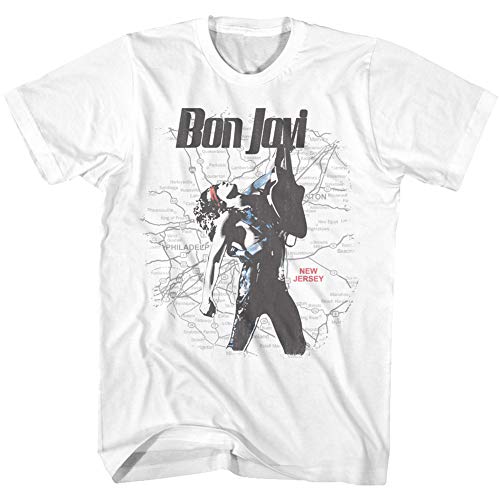

Bon Jovi
Bon Jovi, formed in 1983 in Sayreville, New Jersey, is an iconic American rock band renowned for bridging the gap between heavy metal and pop with style and substance.
Shop the band
Bon Jovi merch








Bon Jovi: Big Choruses, Working-Life Stories
Bon Jovi sit at the meeting point of hard rock, pop songwriting and the American singer-songwriter tradition. Formed in New Jersey in 1983, the band built their identity around Jon Bon Jovi’s recognisable voice, guitar-driven arrangements and choruses designed for a roomful of people to sing together.
Their best-known songs balance confidence with vulnerability. The characters are often trying to keep a relationship alive, get through a difficult week or find a way forward. That human scale matters: beneath the polished production and arena-sized delivery, the writing gives listeners something tangible to hold on to.
The Sound: Hard Rock with a Pop Instinct
Early Bon Jovi records combine bright keyboards, distorted guitars and a strong sense of melody. “Runaway”, from their self-titled 1984 debut, makes that combination clear: its keyboard figure is as central to the song as the guitars.
On their breakthrough records, Richie Sambora’s guitar playing and vocal harmonies helped shape a fuller, more distinctive sound. The talk-box introduction to “Livin’ on a Prayer” became one of their most recognisable musical signatures, while acoustic textures gave songs such as “Wanted Dead or Alive” a different kind of weight.
Bon Jovi rarely treated heaviness as an end in itself. Riffs, solos and production serve the hook. Later records brought in earthier rock arrangements, contemporary pop touches and country influences without abandoning that songwriting priority.
Key Records to Explore
Slippery When Wet (1986) is the clearest starting point. “You Give Love a Bad Name”, “Livin’ on a Prayer” and “Wanted Dead or Alive” show three sides of the band: sharp pop-metal, narrative-driven anthem and road-worn balladry.
New Jersey (1988) expands that approach. “Bad Medicine” leans into swagger and rhythmic punch, while “I’ll Be There for You” demonstrates how central the power ballad had become to their sound.
Keep the Faith (1992) marks a noticeable shift in texture and presentation. The title track’s bass-led groove feels less dependent on the bright gloss of the previous decade, and “Bed of Roses” pairs emotional directness with a spacious arrangement.
These Days (1995) is worth hearing for its darker mood and more reflective writing. It offers a useful counterpoint to the idea that Bon Jovi are only about upbeat choruses.
Crush (2000) brought “It’s My Life”, which restated the band’s strengths for a new era: a concise hook, talk-box colour and a lyric built around personal resolve.
Visual Identity and Merchandise
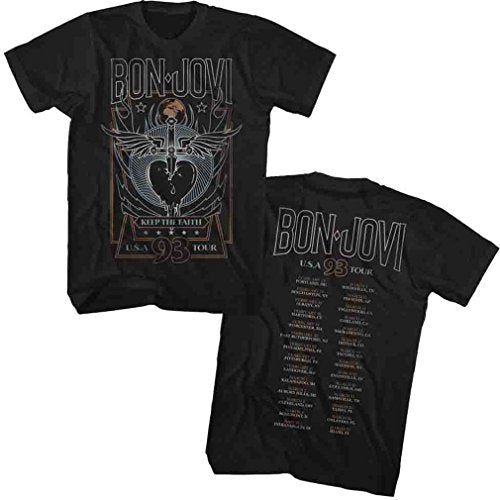
Bon Jovi’s visual identity draws on the same contrasts as their music: toughness and romance, road imagery and polished presentation. The heart-and-dagger motif, often accompanied by wings, neatly captures that mixture.
Album artwork provides another route into the band’s identity. The wet-glass lettering of Slippery When Wet is immediately distinct from the weathered, monochrome feel of New Jersey. Those differences give album-led merchandise a more specific connection than a band name alone.
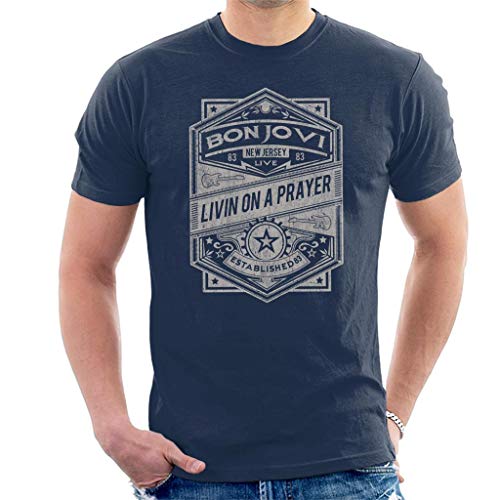
For RockTee readers, the useful question is which part of Bon Jovi’s story a design expresses. A logo-led graphic foregrounds the band’s identity; album artwork points to a particular sound and period. Neither needs an elaborate treatment to carry meaning.